Many business owners view design as something purely visual—a logo, a website, or a collection of marketing materials that simply need to “look professional.” While aesthetics certainly matter, effective design goes much deeper. Strategic design is a business tool that influences perception, builds trust, guides decision-making, and ultimately drives revenue.
For small and medium-sized local businesses, strategic design can be the difference between attracting loyal customers and being overlooked by competitors. In today’s digital-first world, every interaction a customer has with your brand contributes to whether they choose to do business with you—or someone else.
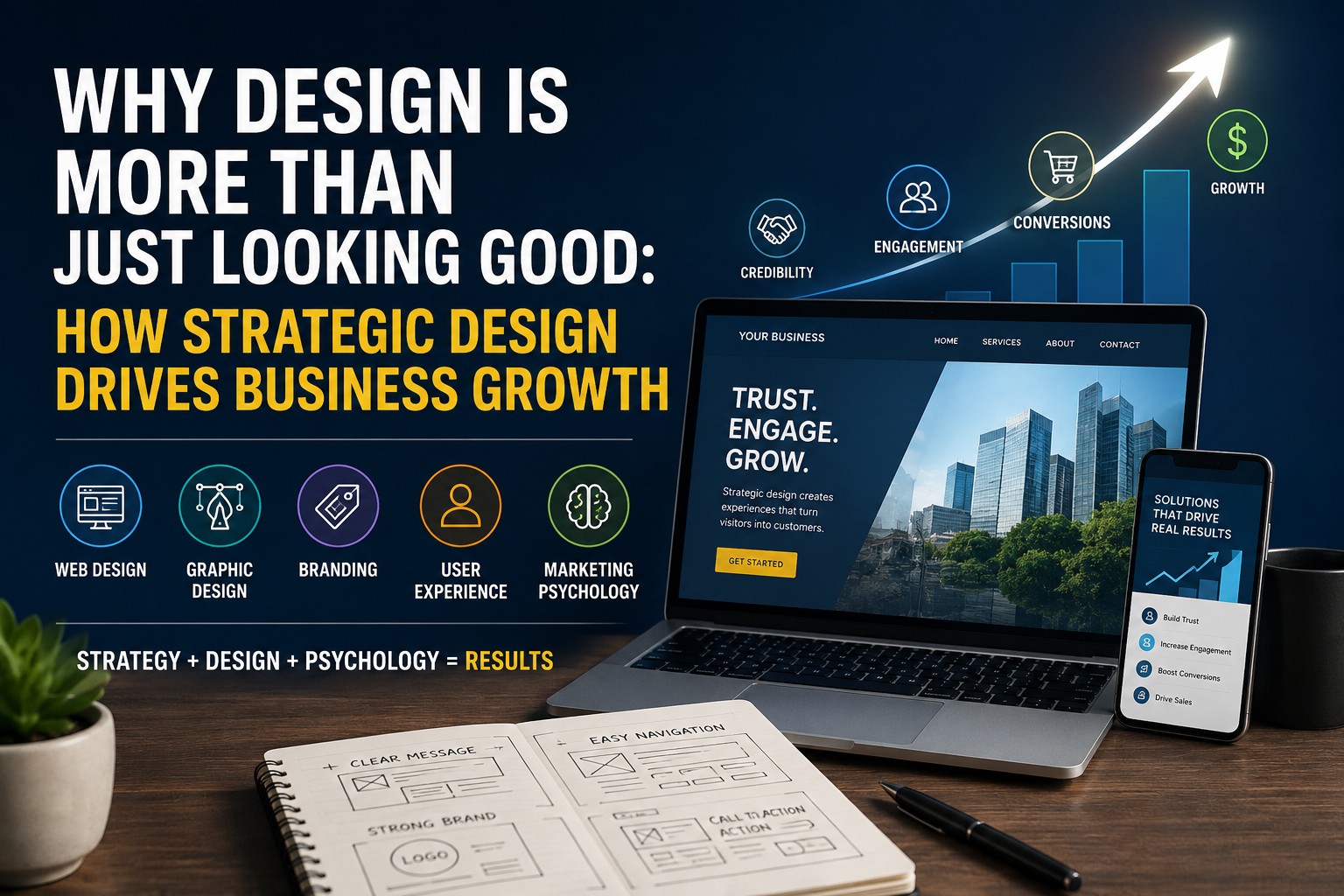
The most successful businesses understand that web design, graphic design, branding, user experience (UX), and marketing psychology are interconnected elements of a larger growth strategy.
The Challenge Facing Local Businesses
Many local businesses struggle with common growth obstacles:
- Limited marketing budgets
- Increasing competition from larger brands
- Outdated websites
- Inconsistent branding
- Low customer engagement
- Poor lead conversion rates
Unfortunately, many owners invest in marketing campaigns before addressing the foundation of their customer experience. Traffic may increase, but if the business lacks credibility, clarity, or consistency, potential customers leave without taking action.
This is where strategic design becomes a powerful growth driver.
Strategic Design Creates Instant Credibility
Research consistently shows that consumers form opinions about a business within seconds of interacting with its website or marketing materials.
A potential customer may ask themselves:
- Does this business look trustworthy?
- Does it appear established?
- Can I confidently spend my money here?
Professional design immediately answers these questions.
A well-designed website, cohesive branding, and polished marketing materials signal professionalism and reliability. On the other hand, outdated visuals, cluttered layouts, and inconsistent branding can create doubt—even when the business provides excellent products or services.
Case Study Example: Local Home Services Company
A regional HVAC company struggled to generate leads despite spending heavily on online advertising.
After a strategic redesign that included:
- A modern website
- Clear service pages
- Improved branding
- Simplified contact forms
- Stronger customer testimonials
The company experienced a significant increase in inquiries and booked appointments within months.
The advertising remained largely unchanged. The difference was that visitors now trusted the business enough to take action.
Branding Shapes Customer Perception
Your brand is not just your logo. It’s the complete experience customers associate with your business.
Strong branding communicates:
- Professionalism
- Expertise
- Reliability
- Values
- Market positioning
When branding is consistent across websites, social media, advertising, printed materials, and customer communications, customers develop familiarity and trust.
Case Study Example: Independent Medical Practice
An independent healthcare practice faced growing competition from larger healthcare networks.
By creating a unified brand identity—including updated messaging, visual consistency, patient-focused content, and improved digital assets—the practice positioned itself as a trusted local authority.
Patient engagement increased because prospective clients immediately understood the practice’s expertise and commitment to care.
Brand consistency helped transform perception and strengthen market position.
User Experience (UX) Directly Impacts Sales
Even the most beautiful website can fail if users cannot easily find information or complete desired actions.
User experience focuses on making every interaction intuitive and friction-free.
Key UX considerations include:
- Easy navigation
- Fast page loading
- Mobile responsiveness
- Clear calls-to-action
- Simple contact forms
- Logical information hierarchy
When customers can quickly find what they need, they are more likely to convert.
Case Study Example: Local Retail Business
A local retailer noticed high website traffic but low online inquiries.
A UX audit revealed several problems:
- Important information was buried in menus
- Contact buttons were difficult to find
- Mobile users experienced navigation issues
After simplifying navigation and improving mobile usability, engagement metrics improved dramatically, leading to more inquiries and increased sales opportunities.
The lesson was simple: removing friction improves conversion.
Marketing Psychology Influences Decision-Making
Customers often make purchasing decisions based on emotion first and logic second.
Strategic design incorporates marketing psychology principles that guide decision-making naturally.
These include:
Social Proof
Testimonials, reviews, case studies, and client success stories help reduce uncertainty.
Visual Hierarchy
Strategic use of size, spacing, contrast, and layout directs attention toward important information and calls-to-action.
Color Psychology
Colors influence perception and emotional response. Strategic color choices help reinforce trust, confidence, energy, or professionalism depending on the business goals.
Cognitive Ease
People prefer experiences that feel simple and intuitive. Clean layouts and clear messaging make decision-making easier.
When marketing psychology is integrated into design, businesses create experiences that encourage action rather than hesitation.
Why Web Design, Branding, UX, and Graphic Design Must Work Together
Many businesses treat these disciplines as separate projects:
- A logo from one provider
- A website from another
- Marketing materials from someone else
The result is often a disconnected customer experience.
Strategic growth occurs when every element works together toward a common goal.
For example:
A customer sees a social media ad → visits your website → reads testimonials → views your services → contacts your business.
Every step should feel consistent.
When branding, UX, web design, graphic design, and marketing psychology align, customers experience a seamless journey that builds trust and increases conversion rates.
This consistency creates a competitive advantage that many local businesses overlook.
Actionable Ways to Improve Your Business Today
If you’re evaluating your current brand and online presence, start by asking these questions:
1. Does My Website Build Trust Within Seconds?
Review your homepage objectively. Does it look modern, professional, and credible?
2. Is My Branding Consistent Everywhere?
Compare your website, social media profiles, advertisements, and printed materials. Do they feel like the same company?
3. Can Customers Easily Take Action?
Test your website from a customer’s perspective. How many clicks does it take to contact you?
4. Is My Website Optimized for Mobile Users?
Most local searches now occur on mobile devices. A poor mobile experience can cost valuable leads.
5. Am I Using Customer Psychology Effectively?
Do you showcase testimonials, reviews, trust signals, and compelling calls-to-action throughout your customer journey?
Small improvements in these areas often produce measurable results.
Design Is an Investment in Business Growth
Design is not an expense. It’s an investment in how customers perceive, trust, and engage with your business.
For small and medium-sized businesses competing in crowded markets, strategic design creates a foundation for sustainable growth. It helps establish credibility, improve customer experiences, increase engagement, and drive more sales.
Businesses that treat design as a growth strategy not just a visual enhancement position themselves to attract better leads, convert more customers, and build stronger brands over the long term.
Ready to Turn Design Into a Growth Engine?
If you’re wondering whether your website, branding, and marketing assets are helping or hurting your business growth, now is the time to find out.
Our business development team helps small and medium-sized businesses align web design, branding, user experience, and marketing strategy to create measurable results.
Whether you’re launching a new brand, redesigning your website, or looking to improve conversions and customer engagement, we can help you build a stronger foundation for growth.
Contact us today to schedule a consultation and discover how strategic design can help your business attract more customers, generate more leads, and increase revenue.
Contact us today
Schedule a consultation and discover how strategic design can help your business attract more customers, generate more leads, and increase revenue.