In today’s digital landscape, businesses have more options than ever when it comes to building an online presence. Two of the most common approaches are landing pages and full websites. While both serve important purposes, they are designed for very different goals. Understanding when to use each can significantly improve your marketing results, lead generation, and overall user experience.
In this article, we’ll explore the differences between landing pages and full websites, the benefits of each, and how to determine which one is right for your business.
What Is a Landing Page?
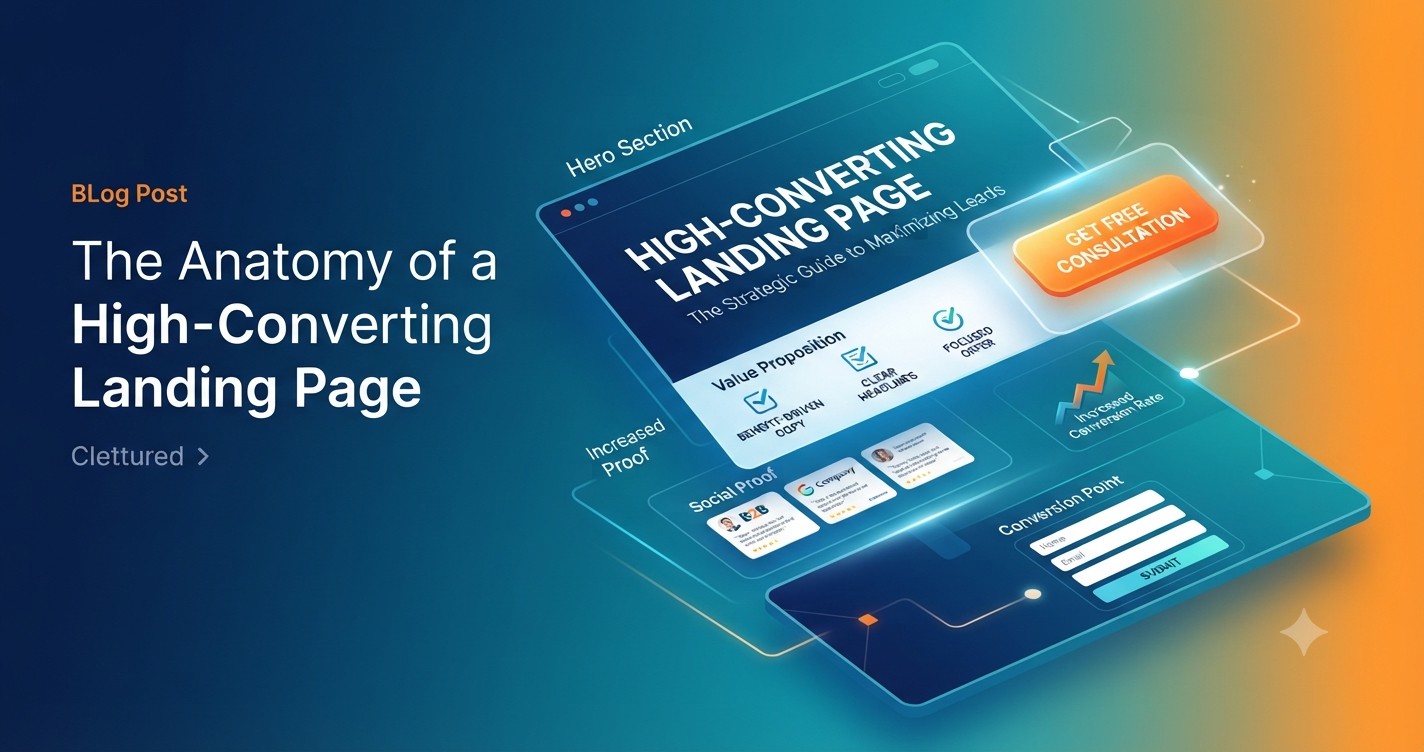
A landing page is a single, focused web page designed with one primary objective: conversion. This could be getting visitors to fill out a form, download a resource, register for an event, or make a purchase.
Landing pages are typically used as part of marketing campaigns, such as:
- Paid advertising (Google Ads, social media ads)
- Email marketing campaigns
- Product launches
- Webinar registrations
- Lead generation offers
Key Characteristics of Landing Pages
Landing pages are intentionally simple and distraction-free. Their goal is to guide visitors toward a single action.
Common features include:
- One clear headline and message
- A focused call-to-action (CTA)
- Minimal navigation or none at all
- Persuasive copy and visuals
- Lead capture forms
- Social proof such as testimonials or reviews
Because landing pages eliminate unnecessary navigation and content, they typically achieve higher conversion rates compared to sending visitors to a general website page.
When to Use a Landing Page
Landing pages are ideal when you want visitors to take a specific action quickly. Consider using one when:
- Running a paid advertising campaign
- Promoting a single product or service
- Offering a downloadable guide or lead magnet
- Launching a new product
- Promoting an event or webinar
- Testing a marketing message
For example, if you’re running a Facebook ad campaign offering a free marketing guide, sending users to a dedicated landing page focused solely on downloading the guide will perform far better than sending them to your homepage.
What Is a Full Website?
A full website is a comprehensive digital presence that provides information about your business, products, services, and brand. Unlike landing pages, websites are designed for exploration and discovery, giving visitors multiple pathways to learn more about what you offer.
A typical business website includes multiple pages such as:
- Home
- About
- Services or Products
- Blog or Resources
- Portfolio or Case Studies
- Contact page
Websites are built to help users understand your brand, build trust, and explore different offerings.
Key Characteristics of Full Websites
Full websites are structured to provide depth and flexibility. They typically include:
- Multi-page navigation
- Detailed service or product descriptions
- Brand storytelling
- Blog or content marketing
- Search engine optimization (SEO)
- Contact and support information
A well-designed website serves as the central hub of your online presence, where customers can learn everything they need to know about your business.
When to Use a Full Website
A full website is the right choice when your business needs a long-term digital foundation.
You should prioritize a website if you:
- Want to build brand credibility
- Offer multiple services or products
- Need to rank in search engines
- Publish blog content or resources
- Want visitors to explore your company
- Need a professional online presence
For example, a web design agency offering branding, UX design, SEO, and development services would benefit from a full website that explains each service in detail and showcases previous work.
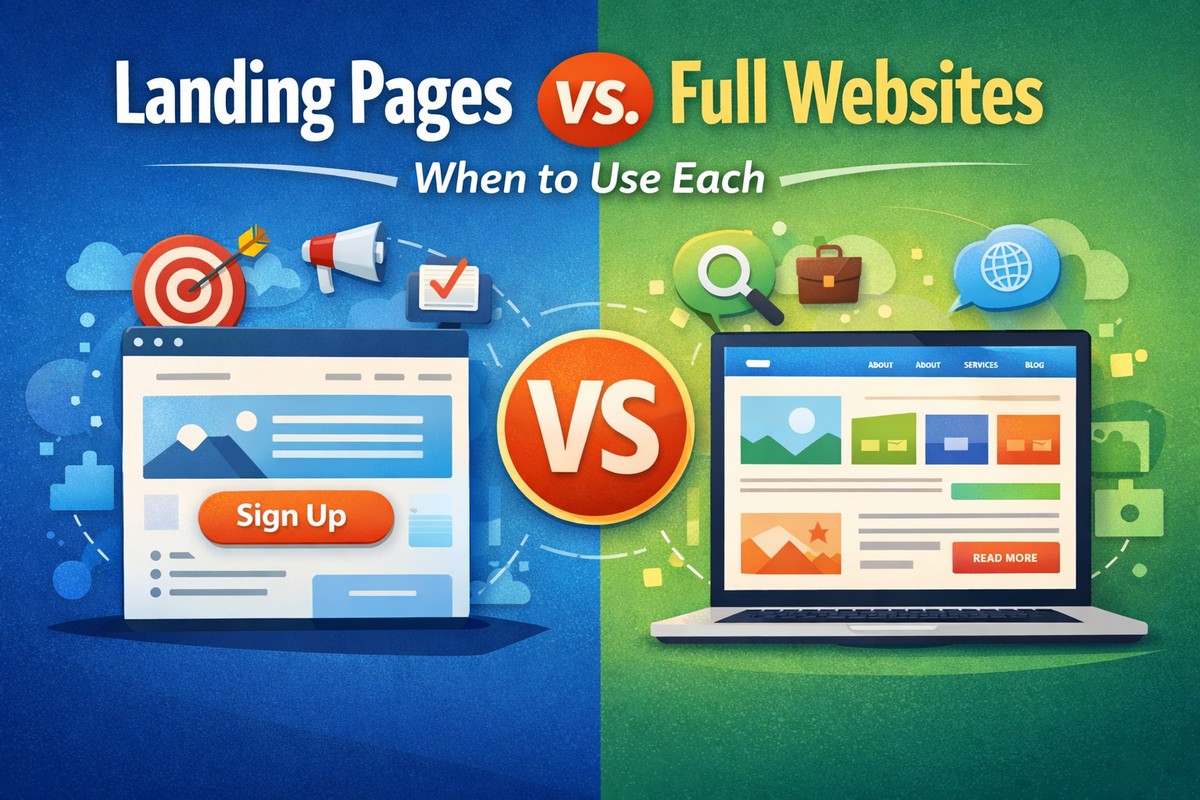
Landing Pages vs. Full Websites: Key Differences
| Feature | Landing Page | Full Website |
|---|---|---|
| Purpose | Single conversion goal | Provide comprehensive information |
| Structure | One page | Multiple pages |
| Navigation | Minimal or none | Full navigation menu |
| Content | Focused and concise | Detailed and diverse |
| Best For | Marketing campaigns | Long-term business presence |
| SEO | Limited | Strong SEO potential |
Both play important roles in a successful digital strategy, but they serve different stages of the customer journey.
The Best Strategy: Use Both Together
Rather than choosing one over the other, the most effective approach is often to use landing pages and websites together.
Your website acts as your brand’s home base, building credibility and providing valuable information. Meanwhile, landing pages support your marketing campaigns by guiding visitors toward a specific conversion.
For example:
- Your website educates visitors about your services and builds trust.
- Your landing pages capture leads from ads, email campaigns, and promotions.
This combination allows businesses to maximize both visibility and conversions.
How to Decide What Your Business Needs
If you’re unsure whether to start with a landing page or a full website, ask yourself these questions:
- Do I need to capture leads quickly for a campaign? → Landing page
- Do I need a long-term online presence? → Website
- Do I offer multiple services or products? → Website
- Am I running paid ads or promotions? → Landing page
- Do I want to rank on Google with content and SEO? → Website
Your business goals will ultimately determine the right approach.
Final Thoughts
Landing pages and full websites are not competitors—they are strategic tools that serve different purposes.
Landing pages excel at driving conversions and supporting marketing campaigns, while full websites provide the foundation for your brand, content, and long-term growth.
By understanding when to use each, businesses can create a more effective digital strategy that attracts visitors, builds trust, and converts prospects into customers.