In the fast-evolving landscape of 2026, SEO is no longer just about “tricking” an algorithm; it is about providing genuine value in an ecosystem dominated by AI-driven search and human-centric updates. If your strategy hasn’t shifted in the last 12 months, you might be following outdated advice that is actively suppressing your visibility.
Here are the most common SEO myths currently hurting rankings and how to pivot for success.
Myth 1: SEO is a “One-and-Done” Project
Many businesses treat SEO like a building renovation something you do once and then leave alone. In 2026, this mindset is a rankings killer. Google’s algorithms now recalibrate in real-time, and competitors are constantly optimizing their content for new AI Overviews.
- The Reality: SEO is a continuous process of maintenance and adaptation.
- The Fix: Conduct quarterly technical audits and monthly content refreshes. Stale content loses “freshness” points, causing it to slip behind more current resources.
Myth 2: AI-Generated Content is the “Easy Button” for Rankings
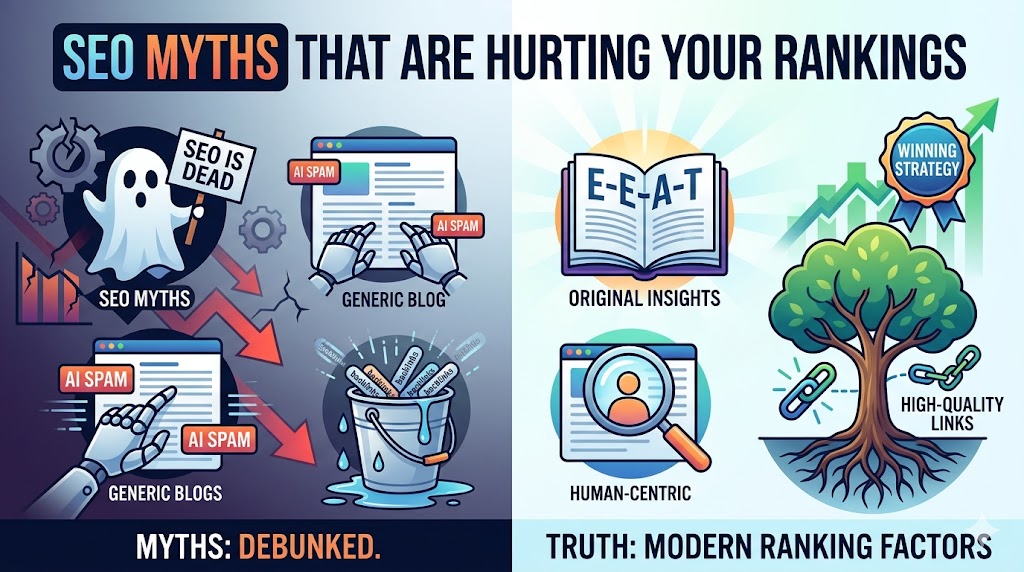
With the explosion of generative AI, the temptation to “scale” content by pumping out hundreds of AI-written blogs is high. However, Google’s February 2026 Core Update specifically targeted “AI slop” generic, surface-level content that lacks original insight.
- The Reality: Google prioritizes E-E-A-T (Experience, Expertise, Authoritativeness, and Trustworthiness). Pure AI content often lacks the “Experience” element.
- The Fix: Use AI for outlining and research, but ensure the final product includes original data, personal anecdotes, or “Brand Journalism” that a machine cannot replicate.
Myth 3: More Backlinks Always Equal Better Rankings
The old-school “quantity over quality” approach to link building is not just ineffective; it’s risky. In 2026, Google’s spam filters are highly sophisticated at identifying artificial link patterns and private blog networks (PBNs).
- The Reality: Five high-authority, niche-relevant links are worth more than 500 low-quality directories.
- The Fix: Focus on “Digital PR” and earned mentions. Aim for links from reputable sites within your specific industry rather than chasing sheer volume.
Myth 4: Keywords are More Important Than Intent
If you are still obsessing over a specific “keyword density” percentage, you’re missing the forest for the trees. Modern search engines use Large Language Models (LLMs) to understand the intent behind a query, not just the words used.
- The Reality: If a user searches for “best CRM for startups” (Informational intent) and you provide a hard-sell landing page (Transactional intent), you will not rank.
- The Fix: Analyze the Search Engine Results Page (SERP) for your target keywords. If the top results are guides, write a guide. If they are product pages, optimize your product page.
Myth 5: Traffic is the Only Metric That Matters
With the rise of “Zero-Click” searches where Google’s AI Overviews provide the answer directly on the search page website sessions are no longer the only indicator of success.
- The Reality: You can have high brand visibility and influence without a user ever clicking through to your site.
- The Fix: Track “Share of Voice” and “AI Visibility” in search. Optimize for featured snippets and AI Overviews so your brand remains the primary source of truth, even if the user doesn’t visit your URL.
Myth 6: Local SEO is “Optional” for National Brands
There is a common misconception that Local SEO is only for small “mom-and-pop” shops. In reality, Google is increasingly localizing search results even for broad industry terms.
- The Reality: Proximity is a major ranking factor. If you don’t have a localized strategy, you’re ceding ground to smaller, local competitors.
- The Fix: Optimize your Google Business Profile (GBP) and create location-specific service pages that highlight your involvement in those communities.