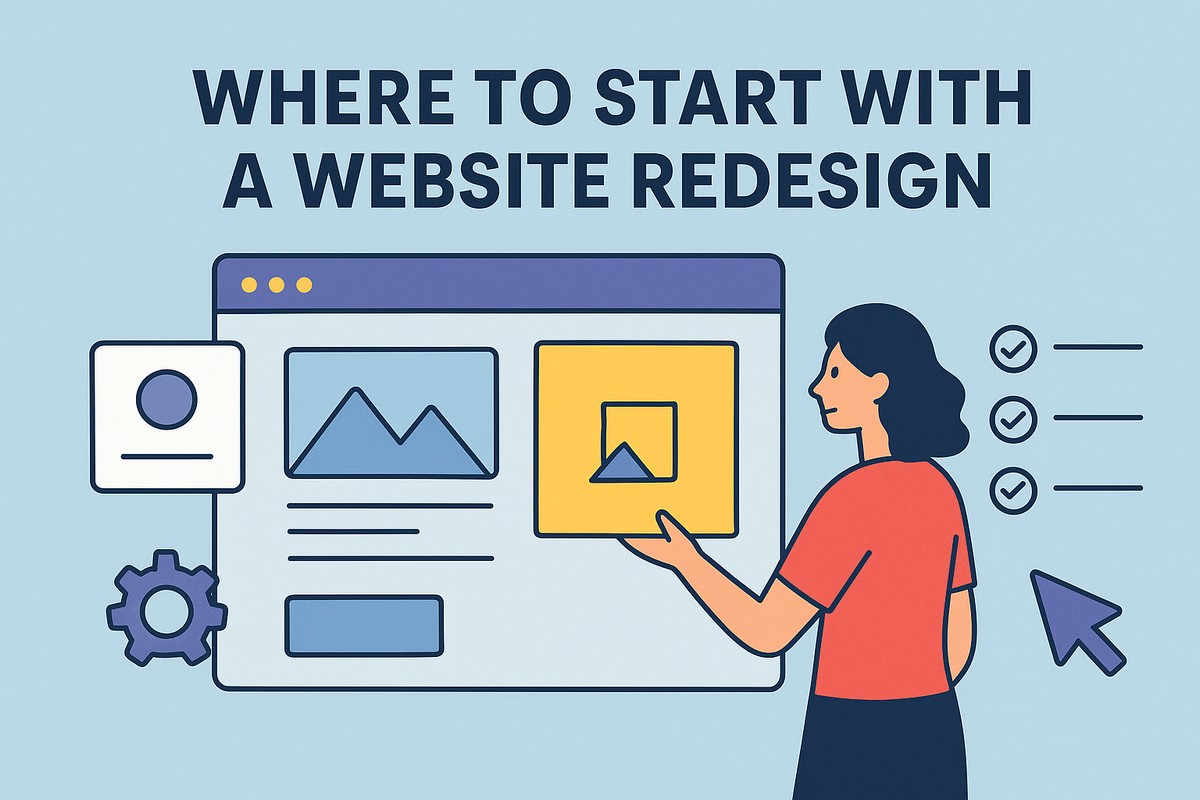
Redesigning your website can feel like a massive undertaking. Whether your goal is to modernize the look, improve user experience, boost conversions, or better align with your brand, a redesign isn’t just about changing visuals—it’s about building a stronger foundation for your digital presence. But where should you start?
1. Define Your Goals
Before diving into design mockups or color schemes, clarify why you’re redesigning. Are you looking to increase leads, improve SEO, enhance mobile usability, or rebrand completely? Defining measurable goals ensures your redesign has a purpose beyond aesthetics.
Example goals might include:
- Increasing conversions by 20% in six months.
- Reducing bounce rates by improving site navigation.
- Updating design to reflect new branding.
- Improving page speed and accessibility.
2. Audit Your Current Website
Your existing site holds valuable insights into what’s working—and what isn’t. Use tools like Google Analytics, Hotjar, or SEMrush to review traffic patterns, top-performing pages, and user behavior.
Ask yourself:
- Which pages attract the most traffic?
- Where do users drop off?
- Is your site mobile-friendly and fast?
- Are there outdated pages or broken links?
This data-driven audit will guide what to keep, fix, or remove.
3. Understand Your Audience
A redesign should serve your users first. Build audience personas to understand their needs, motivations, and challenges. Interview customers, review feedback, and analyze how they currently engage with your site.
The better you understand your audience, the more effective your redesign will be at creating seamless, intuitive user experiences.
4. Review Competitors and Industry Trends
Look at competitor websites and leading industry examples to identify best practices. What design elements, messaging, or features stand out? While you don’t want to copy competitors, benchmarking helps ensure your redesign is competitive and relevant.
5. Revisit Your Brand Identity and Messaging
Your website is often the first touchpoint for potential customers. Ensure your redesign reflects your brand voice, values, and personality. This includes colors, fonts, imagery, and messaging consistency across all pages.
If your branding has evolved, this is the perfect time to align your website with your current identity.
6. Build a Sitemap and Content Plan
Structure matters as much as design. Create a sitemap to outline your new site’s hierarchy and how users will navigate from page to page. Pair this with a content plan that addresses your audience’s pain points, answers their questions, and supports SEO goals.
7. Prioritize User Experience (UX) and Accessibility
A beautiful website is meaningless if users can’t find what they need. Focus on usability: clear navigation, mobile optimization, fast load times, and accessible design (e.g., alt text for images, color contrast, readable fonts).
Accessibility not only expands your audience but also demonstrates inclusivity and professionalism.
8. Choose the Right Tools and Team
Depending on your goals and resources, you might work with a web design agency, freelancers, or in-house teams. Additionally, consider which platform or CMS (like WordPress, Webflow, or Shopify) best fits your long-term needs.
9. Create Wireframes and Prototypes
Before building the final site, develop wireframes (basic layouts) and clickable prototypes. This allows you to visualize functionality and user flow early, making it easier to adjust before development begins.
10. Test, Launch, and Optimize
After development, thoroughly test your new site across devices and browsers. Check for broken links, load times, and usability issues. Once launched, monitor performance against your goals—and be ready to adjust.
A redesign isn’t a one-time event. Continuous updates and optimizations will keep your website performing at its best.
Final Thoughts
Starting a website redesign doesn’t have to be overwhelming. By setting clear goals, auditing your current site, and prioritizing your audience’s experience, you’ll ensure your redesign is both strategic and successful. Remember: it’s not just about a fresh look—it’s about building a website that drives results.