In today’s hyper-connected world, having a great product or service is only half the battle. If your customers can’t find you online, you’re leaving money on the table. But for many small business owners, navigating the digital landscape feels like trying to read a map in a foreign language.
Between algorithm changes, new social platforms, and the rise of AI tools, it’s easy to get overwhelmed. The good news? You don’t need to be on every platform or spend a fortune to see real results. You just need a strategic roadmap.
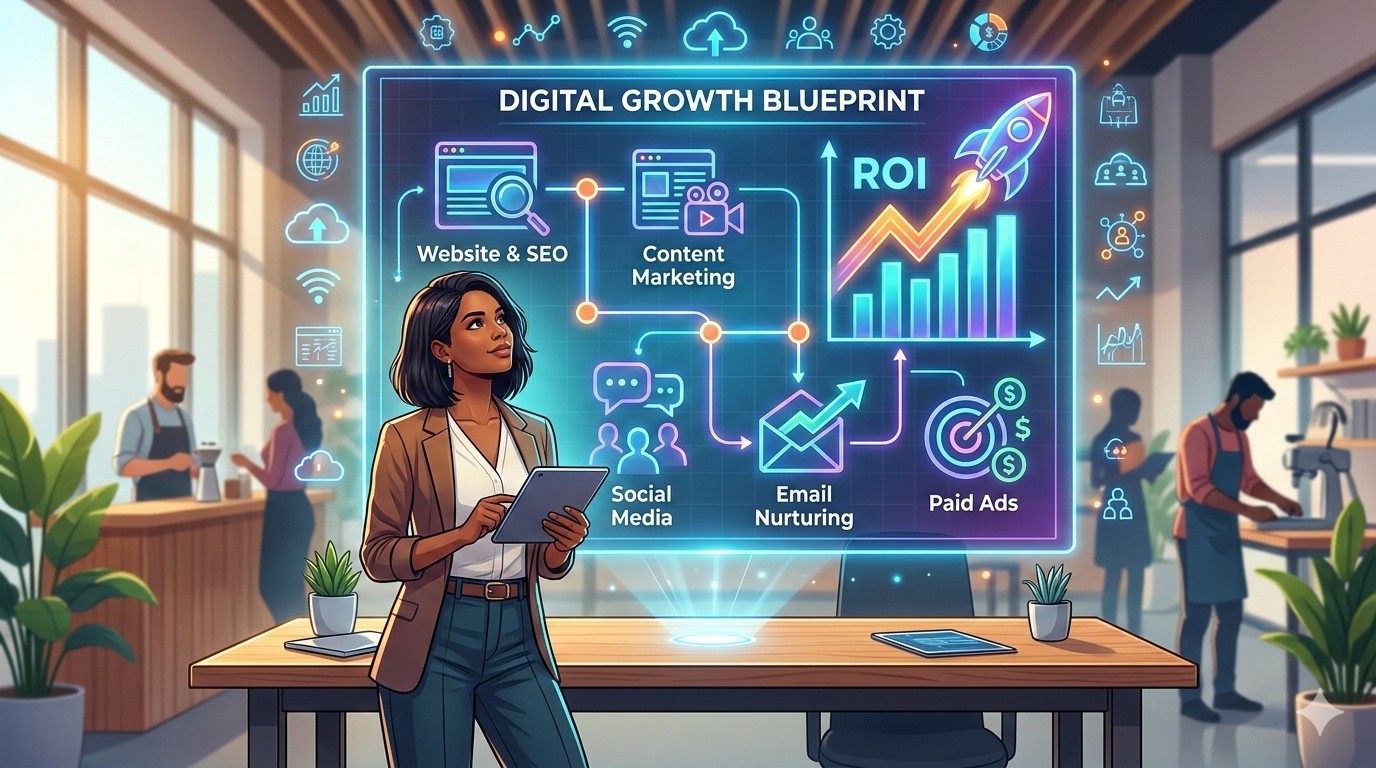
Here is your comprehensive Digital Growth Blueprint—a step-by-step guide to building a scalable, profitable online presence for your small business.
Phase 1: Solidify Your Digital Foundation
Before you spend a dime on advertising or spend hours making social media reels, you need a strong foundation. Think of this as your digital storefront.
- Optimize Your Website for Conversions: Your website isn’t just a digital brochure; it’s your best salesperson. Ensure it is mobile-friendly, loads in under three seconds, and has clear Calls-to-Action (CTAs) like “Book Now” or “Get a Free Quote.”
- Master Local SEO: If you serve a local market, claiming and optimizing your Google Business Profile is non-negotiable. Keep your hours updated, post regular updates, and actively request reviews from satisfied customers.
- Nail the SEO Basics: Ensure your website copy includes the keywords your ideal customers are actually typing into search engines.
Phase 2: Build Authority with Content
People do business with brands they trust. Content marketing is how you build that trust before a customer ever reaches out to you.
- Answer Their Questions: Start a blog, create an FAQ section, or record short videos answering the most common questions your sales team gets. By providing value upfront, you position yourself as an industry expert.
- Leverage Video: Video dominates online consumption. You don’t need a Hollywood budget; a smartphone and good lighting are enough. Share behind-the-scenes looks, product tutorials, or customer testimonials.
- Stay Consistent: It is better to publish one high-quality piece of content a week than to post randomly every few months. Create a realistic content calendar and stick to it.
Phase 3: Engage Your Audience on Social Media
Social media is your digital networking event. It’s where you build community, showcase your brand personality, and engage directly with your market.
- Pick the Right Platforms: Don’t spread yourself too thin. If you are B2B, focus on LinkedIn. If you sell highly visual products, double down on Instagram and Pinterest. Go where your target audience already hangs out.
- Foster Engagement, Don’t Just Broadcast: Social media is a two-way street. Reply to comments, run polls, and ask questions. The more engaged your audience is, the more the algorithm will favor your content.
Phase 4: Nurture Leads with Email Marketing
Social media platforms own your followers, but you own your email list. Email marketing remains one of the highest-converting channels for small businesses.
- Create a Lead Magnet: Give people a reason to hand over their email addresses. Offer a free guide, a discount code, or an exclusive webinar in exchange for their subscription.
- Automate the Welcome Sequence: When someone joins your list, trigger an automated series of emails that introduces your brand, shares your best content, and gently pitches your core offering.
- Segment Your Audience: Don’t blast the same message to everyone. Segment your list based on customer behavior or interests so you can send highly relevant, personalized offers.
Phase 5: Scale with Paid Advertising
Once your organic (free) systems are running smoothly, paid advertising acts as gasoline poured on a fire.
- Start Small and Test: Whether it’s Google Ads (intent-based) or Meta Ads (interruption-based), start with a small budget to test different headlines, images, and audiences.
- Retargeting is Key: Most people won’t buy on their first visit. Set up retargeting ads to stay in front of people who have visited your website but haven’t converted yet.
Phase 6: Measure, Analyze, and Iterate
The beauty of digital marketing is that everything is measurable. If you aren’t tracking your data, you’re flying blind.
- Track the Metrics that Matter: Vanity metrics (like followers or likes) are nice, but focus on actionable metrics: Customer Acquisition Cost (CAC), conversion rates, and Return on Ad Spend (ROAS).
- Use Free Tools: Utilize Google Analytics to understand website traffic and platform-specific insights (like Instagram Insights) to see what content resonates best.
The Bottom Line
Digital growth doesn’t happen overnight. It is the result of consistent, strategic actions compounding over time. By building a strong foundation, creating valuable content, capturing leads, and measuring your progress, you’ll set your small business up for sustainable, long-term success.
Would you like me to help you draft a specific piece of content for your business, such as a lead magnet idea, an email welcome sequence, or a social media content calendar?