Your website is often the first impression people have of your brand—and in many cases, it’s your best salesperson. But even well-designed sites can quietly lose visitors, leads, and sales due to small, fixable issues.
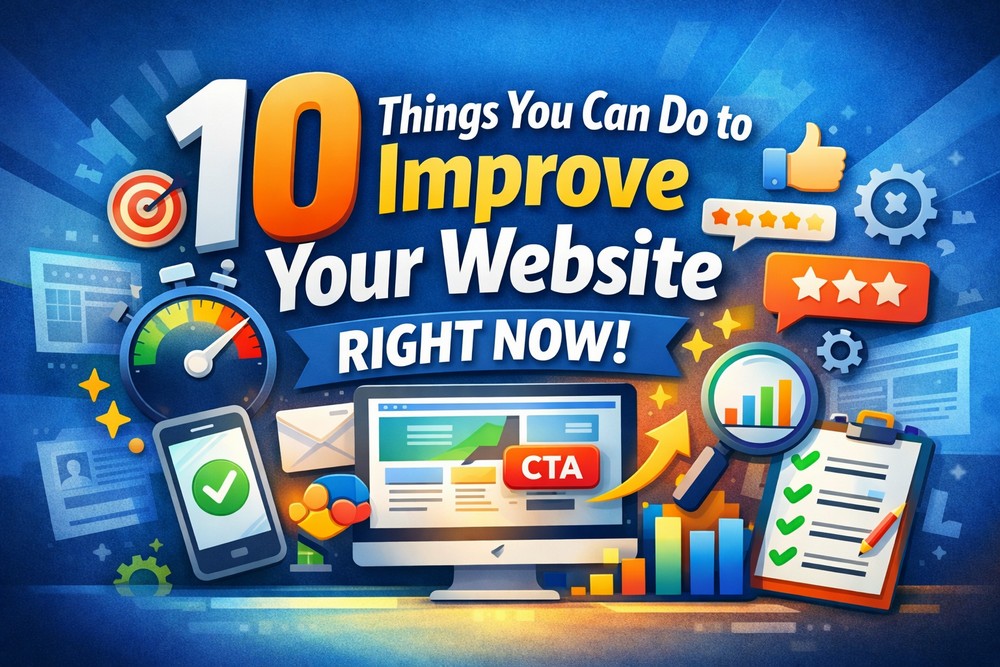
The good news? You don’t need a full redesign to see improvement. Here are 10 things you can do right now to make your website more effective, user-friendly, and conversion-focused.
1. Improve Your Page Load Speed
Slow websites kill conversions. Studies show visitors will leave if a page takes more than a few seconds to load.
Quick wins:
- Compress images
- Remove unnecessary plugins
- Enable caching
- Use a performance plugin or CDN
Faster load times improve user experience and search engine rankings.
2. Make Your Message Clear Above the Fold
When someone lands on your site, they should instantly know:
- What you do
- Who you help
- Why it matters
If your headline is vague or filled with buzzwords, visitors will bounce. Use simple, benefit-driven language and place it front and center.
3. Optimize for Mobile Users
More than half of web traffic comes from mobile devices. If your site isn’t mobile-friendly, you’re losing opportunities.
Check that:
- Text is readable without zooming
- Buttons are easy to tap
- Forms work properly on mobile
A responsive design isn’t optional anymore—it’s essential.
4. Strengthen Your Calls-to-Action (CTAs)
Every page should guide visitors toward a next step.
Replace weak CTAs like “Learn More” with action-driven alternatives such as:
- “Get a Free Quote”
- “Schedule a Consultation”
- “Download the Guide”
Make sure CTAs stand out visually and appear multiple times on longer pages.
5. Simplify Your Navigation
If visitors can’t quickly find what they’re looking for, they’ll leave.
Best practices:
- Limit menu items
- Use clear labels (avoid clever but confusing names)
- Highlight your most important pages
A clean navigation improves usability and keeps users engaged longer.
6. Update and Improve Your Content
Outdated or thin content can hurt your credibility and SEO.
Take time to:
- Refresh old blog posts
- Add more detail to high-traffic pages
- Remove irrelevant or redundant content
Helpful, current content builds trust and positions your brand as an authority.
7. Add Social Proof
People trust other people more than brands.
Boost credibility by adding:
- Client testimonials
- Reviews
- Case studies
- Logos of companies you’ve worked with
Place social proof near CTAs to reinforce decision-making.
8. Improve Readability
Online readers scan—they don’t read word for word.
Make your content easier to consume by:
- Using short paragraphs
- Adding bullet points
- Breaking content into sections with headings
- Using plenty of white space
Readable content keeps visitors on your site longer.
9. Fix Broken Links and Errors
Broken links, missing images, or 404 errors create a poor user experience and hurt SEO.
Run regular checks to:
- Fix broken links
- Update redirects
- Correct formatting or display issues
A clean, error-free site signals professionalism and trust.
10. Track What’s Working (and What’s Not)
You can’t improve what you don’t measure.
Make sure you’re using tools like:
- Google Analytics
- Google Search Console
- Heatmaps or session recordings
Tracking behavior helps you make smarter decisions and continuously optimize your site.
Final Thoughts
Improving your website doesn’t have to be overwhelming. Small changes—made consistently—can lead to better engagement, stronger conversions, and more growth for your business.
If you’re not sure where to start, begin with clarity, speed, and usability. Those three alone can make a noticeable difference.
Your website should work for you, not against you.